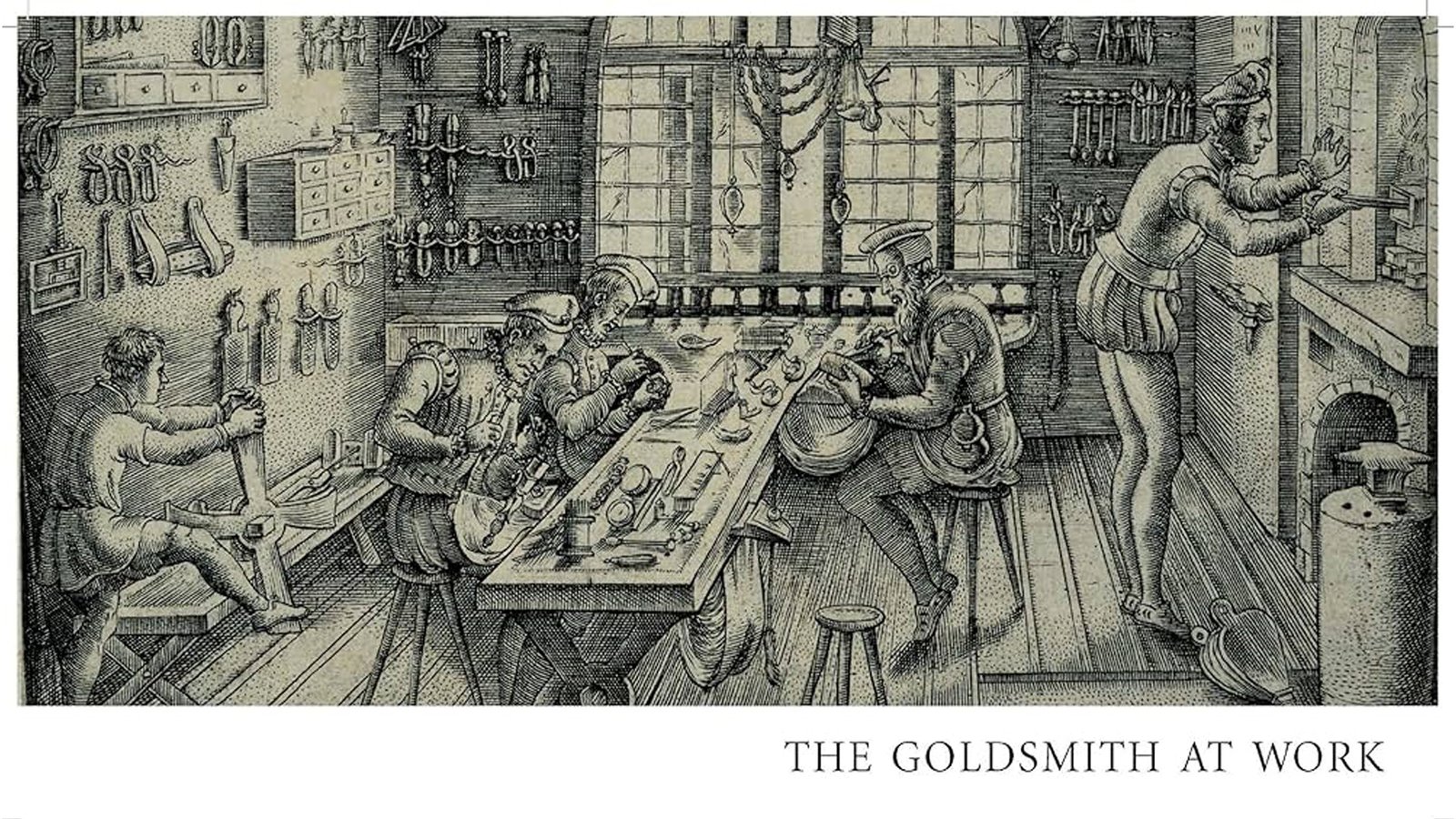

Gold is one of the first metals humans ever worked with because it’s naturally soft, malleable, and found in pure form. Evidence of goldworking appears as early as 4000–3000 BCE.
Earliest Centers
- Mesopotamia (Sumerians, c. 3000 BCE):
Produced elaborate jewelry, beads, filigree, and granulation. The “Gold Lyre of Ur” and royal jewelry from the Royal Tombs of Ur are early masterpieces. - Egypt (Old–New Kingdom, 2700–1100 BCE):
Egyptians excelled in goldsmithing; the Nile region was rich in gold. They used techniques like casting, hammering, granulation, and cloisonné.
Famous works include Tutankhamun’s funerary mask and intricate amulets and collars.
Techniques Developed in Antiquity
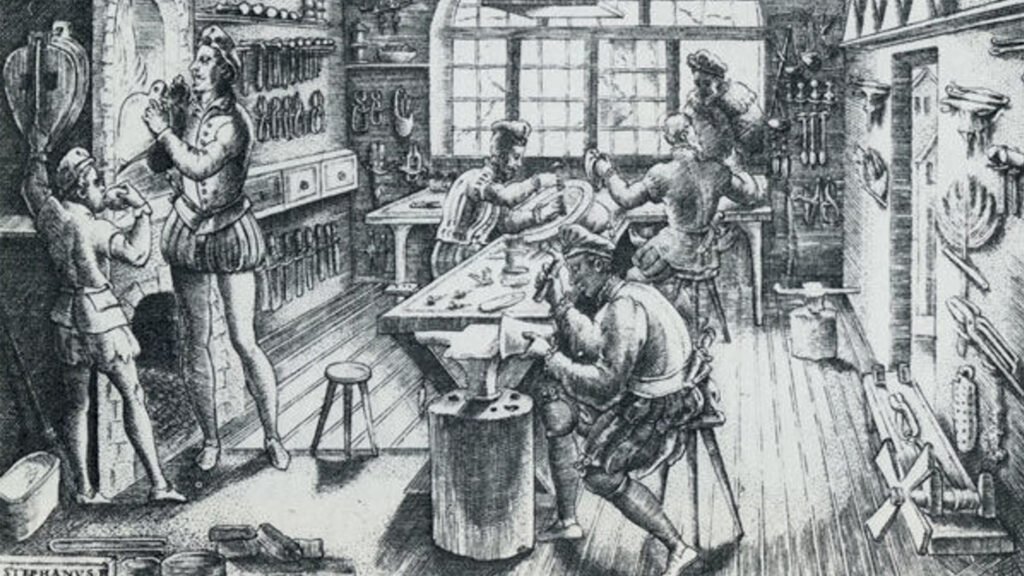
Ancient goldsmiths established many techniques still used today:
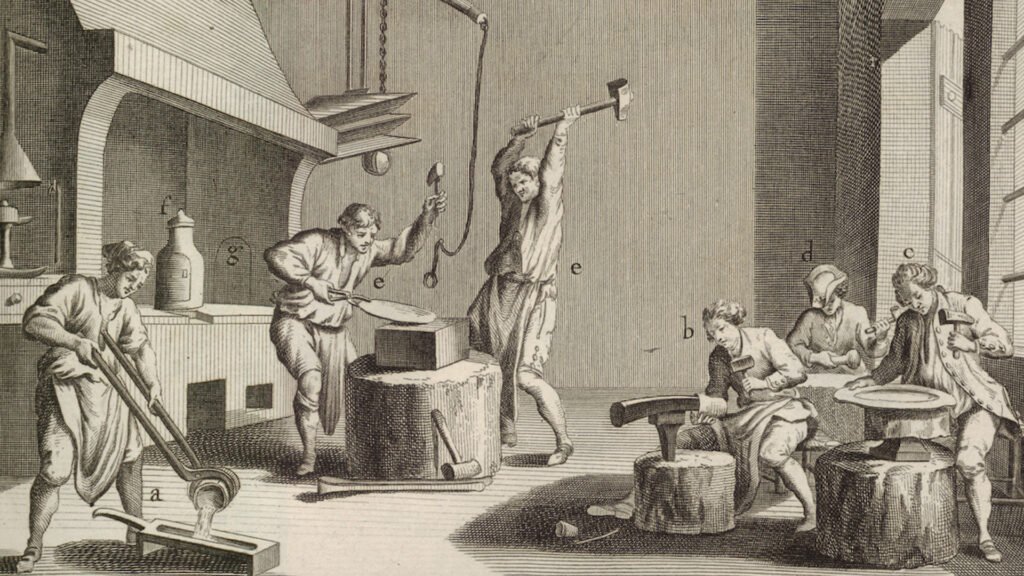
1. Hammering & Raising
Forming gold sheets into bowls, cups, and ornaments.
2. Lost-Wax Casting (Cire Perdue)
Developed in the Near East; allowed complex shapes and 3D forms.
3. Granulation
Microscopic beads of gold fused onto a surface without solder. Perfected by the Etruscans (Italy, 8th–3rd century BCE).
4. Filigree
Delicate gold wire patterns; common in Greek, Phoenician, and Middle Eastern jewelry.
5. Alloying
Mixing gold with copper, silver, and other metals to create variations in color and hardness.
Regional Highlights
Greece (c. 800–300 BCE)
- Known for naturalistic motifs, wreath-like diadems, and hollow gold beads.
- Extensive use of filigree and granulation.
Etruscans (Italy)
- Masters of granulation and sophisticated soldering.
- Created extremely intricate goldwork that still puzzles modern artisans.
Rome (c. 27 BCE–400 CE)
- Standardized jewelry forms (rings, bracelets, brooches).
- Developed gemstone setting techniques that spread across the empire.
Persia & Central Asia
- Achaemenid and Sassanian cultures produced gold vessels, plaques, and regalia with animal and mythological motifs.
India
- Goldsmithing dates to the Indus Valley Civilization (3300–1300 BCE).
- The subcontinent later became famous for high-karat gold jewelry, repoussé work, and filigree.
China
- Early goldwork appears in the Shang dynasty (c. 1600–1046 BCE), but major innovations came with nomadic steppe cultures influencing Chinese metalwork.
Role of Goldsmiths in Ancient Societies
Goldsmiths were:
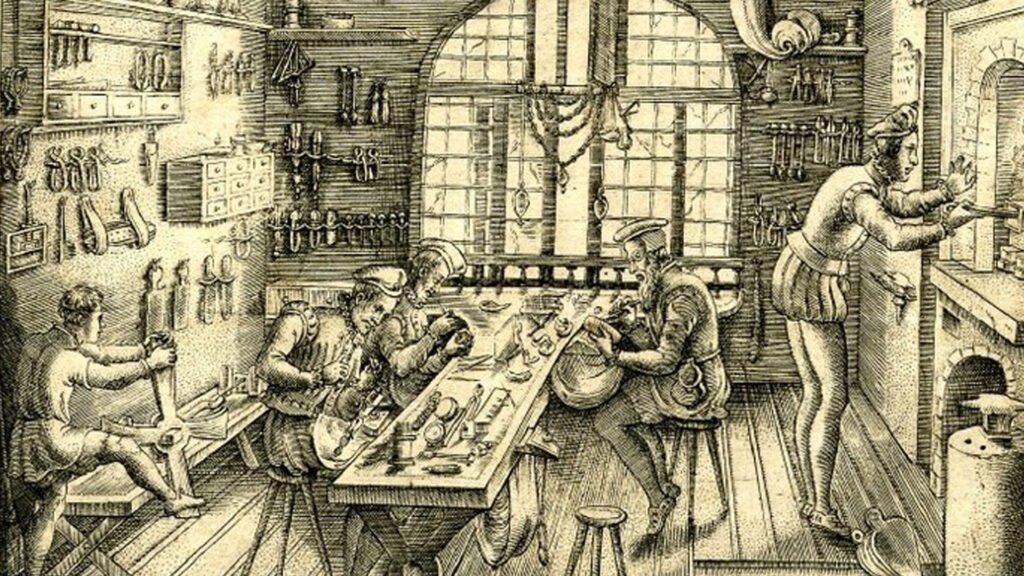
- Highly respected artisans—often working for temples, royalty, or elites.
- Keepers of technology, since techniques like granulation or advanced casting were secrets passed through guilds or families.
- Economic agents, as gold objects also served as wealth reserves and trade goods.
Legacy
Many modern jewelry techniques—casting, soldering, alloying, stone setting—are direct descendants of ancient goldsmith craftsmanship. Museums today preserve these works as some of humanity’s most enduring art.
If you’d like, I can dig deeper into:
- a specific civilization (Egyptian, Greek, Etruscan, etc.)
- techniques (granulation, filigree, repoussé)
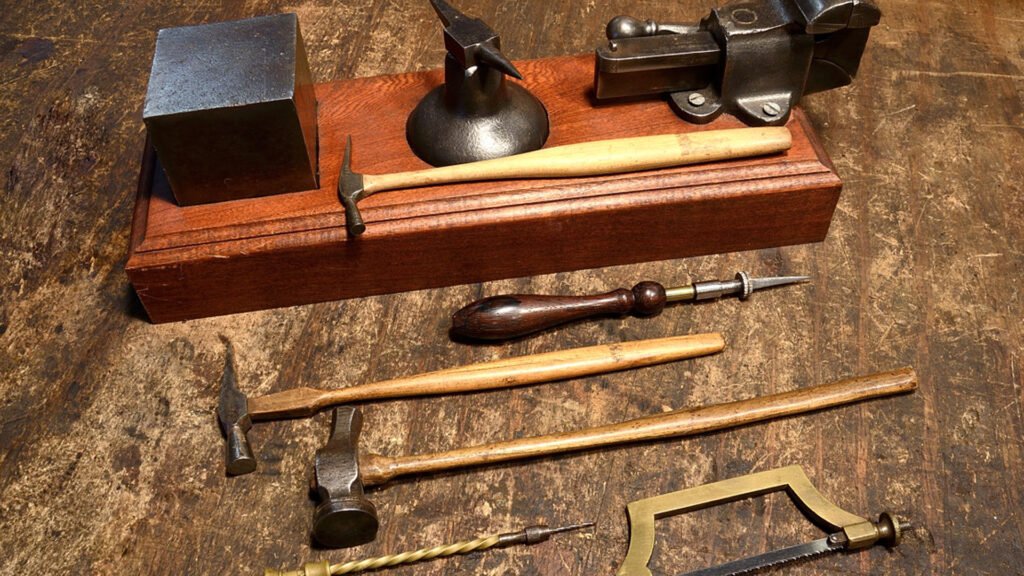
- tools used by ancient goldsmiths
- how ancient goldsmithing influences modern jewelry and metal arts
- timelines or illustrated explanations



 English (United States)
  English (UK)