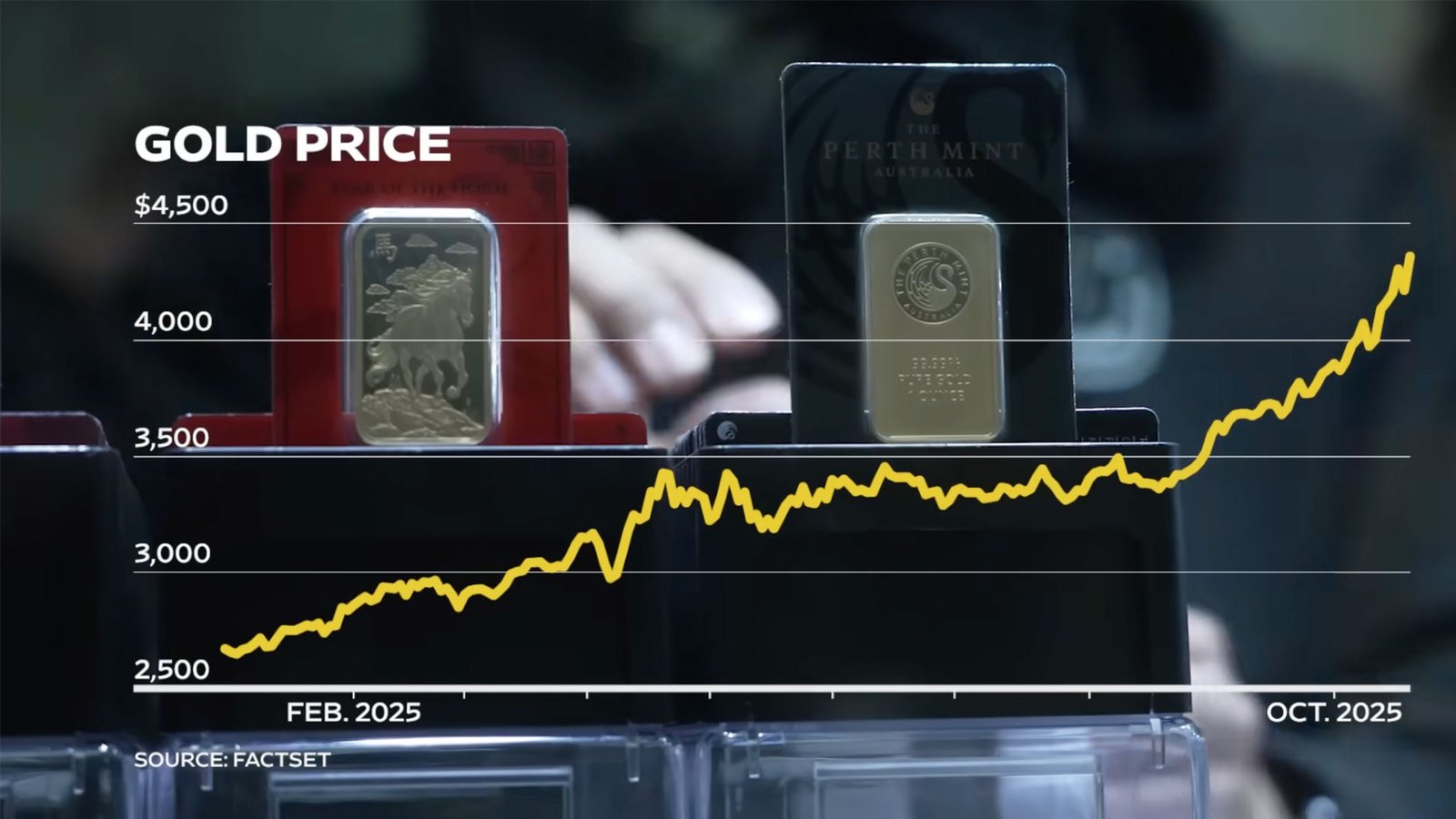
The price of gold per troy ounce has reached an all-time high in recent weeks as it crossed above $4,000 for the first time in October. WSJ spent a day in a bullion exchange in New York’s bustling Diamond District to see who’s cashing in on the gold rush.
The process of “flipping” gold scraps in New York City’s Diamond District (specifically 47th Street) is a high-speed, high-volume ecosystem where discarded jewelry is transformed back into pure, investment-grade bullion.
Based on recent industry insights and reports (such as those from The Wall Street Journal), here is a summary of how the process works:
1. The Intake: Buying from the Public
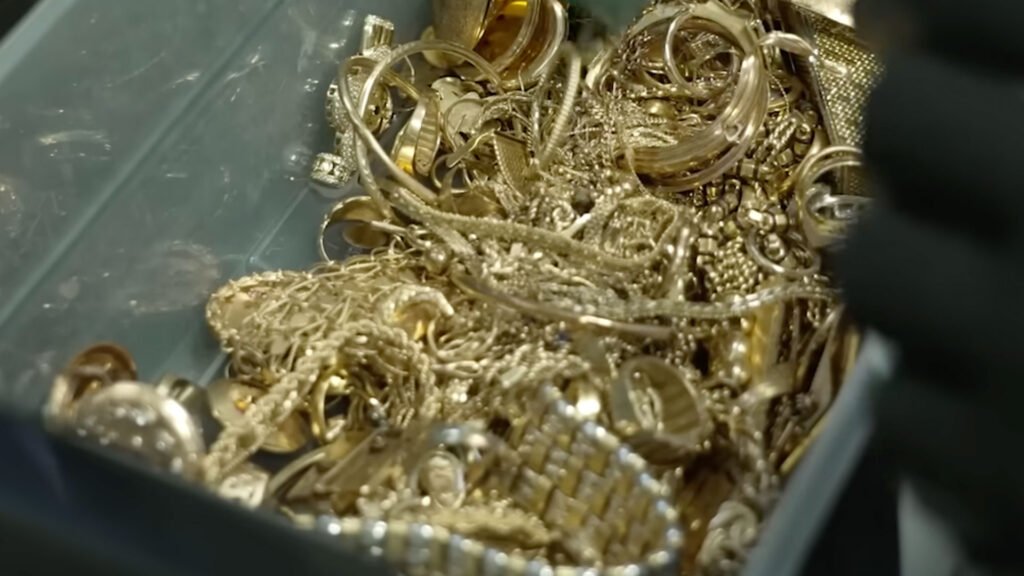
The process begins when retail customers bring in “scrap”—broken chains, mismatched earrings, or dental gold—to local dealers.
- Evaluation: Dealers use XRF (X-ray fluorescence) scanners or traditional acid tests to determine the exact karat (purity) of the gold.
- The Payout: Sellers are paid based on the “melt value,” which is the current spot price of gold minus a small percentage (spread) that the dealer keeps as profit.
2. Consolidation and Preparation
Individual dealers typically don’t refine small amounts themselves. Instead, they act as aggregators.
- Bulking Up: Once a dealer collects a significant amount of scrap, they prepare it for a refinery or a larger bullion exchange.
- The “Melt”: In some back-office shops, scraps are melted into rough “buttons” or bars to verify the weight and purity of the combined lot before it moves up the supply chain.
3. The Refining Process
The scrap is sent to specialized refineries, often located within or near the district.
- Purification: The gold is melted in high-temperature furnaces and treated with chemicals (like borax or chlorine) or electrolysis to separate the pure gold from base metals (copper, silver, zinc).
- Standardization: The result is 99.9% (24K) pure gold. This “new” gold is then cast into standardized products: 1-ounce bars, 10-ounce bars, or kilobars.
4. The Flip: Selling to New Buyers
The “flip” is completed when the refined gold is sold back into the market, but often to a different demographic than the original sellers.
- Investment Grade: While the scrap came from jewelry owners, the flipped product is sold to investors seeking “safe-haven” assets.
- Market Dynamics: Dealers profit from the high volume and the “buy-sell spread.” When gold prices hit all-time highs (as seen in recent years), the volume of scrap coming in increases, allowing dealers to churn inventory rapidly.

5. The “Urban Mining” Subculture
An interesting side-note to the Diamond District’s gold flip is “urban mining.” Because of the sheer volume of gold handled on 47th Street, microscopic fragments often cling to workers’ clothes or shoes and end up on the sidewalk.Some individuals, known as “street miners,” literally scrape the cracks of the pavement to recover hundreds of dollars worth of gold dust per week, which they then sell back to the very shops it fell out of.+2
Summary of the Cycle:
- Consumer sells broken 14K jewelry for cash.
- Dealer aggregates 14K scraps and sends them to a Refinery.
- Refinery purifies the scrap into 24K investment-grade bars.
- Investor buys the 24K bars to hedge against inflation.
News Source



 English (United States)
  English (UK)