The Inspiring Business History of Lalithaa Jewellery and Dr. M. Kiran Kumar Jain
The Indian jewellery industry is filled with stories of family businesses, traditional craftsmanship, entrepreneurial ambition and generations of customer trust. Among the remarkable stories of modern jewellery retail in South India is the journey of Lalithaa Jewellery, a brand that grew from a traditional Chennai jewellery business into a large-scale jewellery retail and manufacturing enterprise.
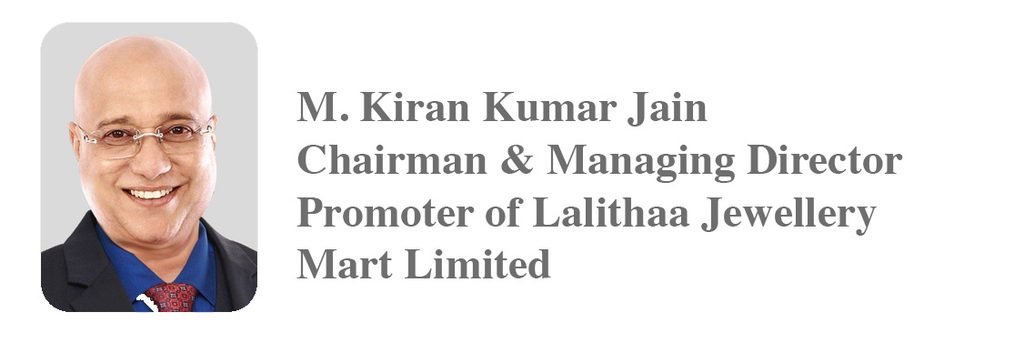
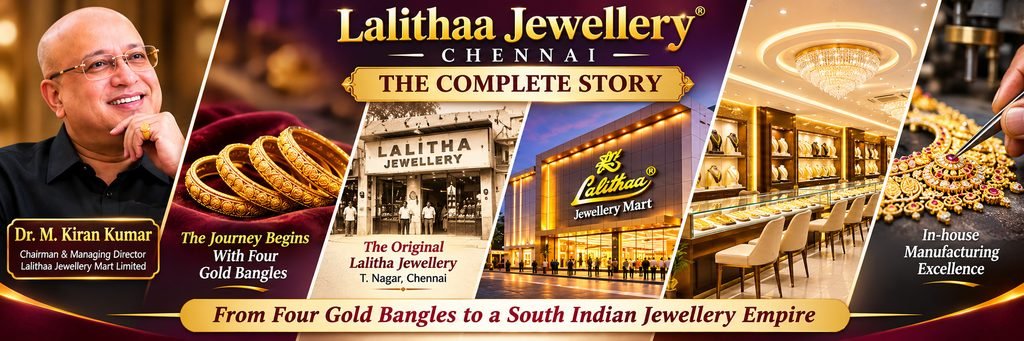
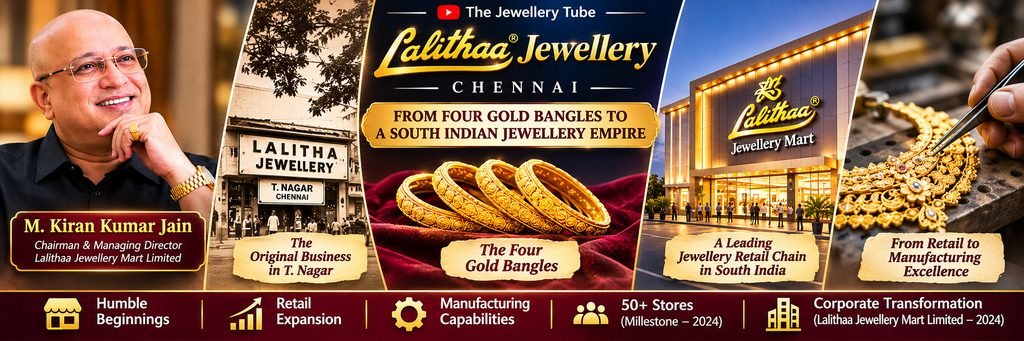
The story is closely associated with M. Kiran Kumar Jain, whose entrepreneurial journey is often described as beginning with just four gold bangles given to him by his mother.
From humble beginnings in the jewellery trade to building a large jewellery retail network across South India, Lalithaa Jewellery’s journey reflects determination, business vision, customer-focused pricing and the transformation of India’s organised jewellery retail sector.
The Beginning of the Jewellery Journey
The story of M. Kiran Kumar Jain began long before Lalithaa Jewellery became a major retail brand.
Born into a financially modest family, Kiran Kumar developed an early understanding of the jewellery business through his family’s association with the trade. His father worked in the jewellery industry, and Kiran Kumar began working in jewellery-related activities at a young age.
His early years were not easy. Published interviews describe him as having faced educational challenges and financial difficulties during his childhood. However, his interest in business and his determination to build an independent career eventually led him toward the jewellery industry.
At a time when Chennai was already one of India’s major jewellery trading centres, he recognised the opportunity to connect jewellery manufacturing and wholesale supply with larger markets.
Four Gold Bangles: The Beginning of an Entrepreneurial Journey
One of the most inspiring stories associated with Kiran Kumar’s entrepreneurial journey is the support he received from his mother.
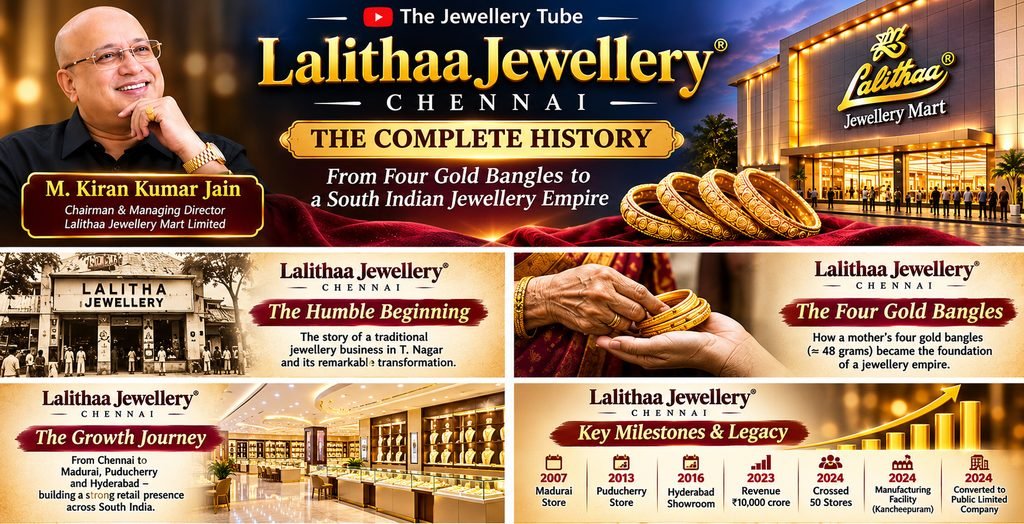
When he did not have sufficient capital to start his business, his mother reportedly gave him four gold bangles, weighing approximately 48 grams, to help him begin.
Instead of treating the gold as personal wealth, he used it as business capital.
The bangles were converted into jewellery pieces, which he took to Chennai in search of customers.
This small beginning became the foundation of his jewellery trading journey.
The story of the four gold bangles has become one of the most memorable chapters in the Lalithaa Jewellery business narrative. It represents the importance of family support, courage, opportunity and entrepreneurial determination.
The First Major Opportunity in Chennai
Chennai was already a major jewellery market, especially the T. Nagar area, which had developed into one of India’s most important jewellery shopping destinations.
During his early business activities, Kiran Kumar approached jewellery retailers in Chennai to sell the jewellery he had produced.
One of the important relationships he developed was with M. S. Kandaswamy Pillai, associated with the original Lalitha Jewellery business.
Published accounts describe how Kiran Kumar approached the jewellery establishment with his products and gradually developed a supply relationship.
The initial orders helped him establish himself in the jewellery trade.
From these early transactions, his business began to grow through wholesale supply and jewellery trading.
Building a Jewellery Wholesale Business
Before entering large-scale retail, Kiran Kumar developed experience in jewellery wholesale.
His early business activities involved:
- Jewellery manufacturing and sourcing
- Wholesale supply
- Developing relationships with jewellery retailers
- Understanding customer demand
- Managing jewellery production
- Building supplier and retailer networks
- Travelling between markets
- Expanding business relationships
He frequently travelled between Nellore and Chennai, reportedly using state-run buses during the early stages of his business.
As his business expanded, he developed relationships with larger jewellery retailers and wholesalers.
Published reports describe his wholesale network eventually extending to international markets, including London, Singapore, Dubai and Canada.
The wholesale business gave him an important understanding of the jewellery industry’s supply chain, manufacturing costs, product pricing and market demand.
The Original Lalitha Jewellery – Chennai
The original Lalitha Jewellery business was associated with M. S. Kandaswamy Pillai and operated in Chennai.
The business was established in the traditional jewellery retail environment of T. Nagar.
Like many jewellery businesses of that period, Lalitha Jewellery developed through customer relationships, traditional jewellery sales and the reputation of the establishment.
Kiran Kumar’s association with the business initially developed through jewellery supply.
However, the business later faced financial difficulties.
This situation became one of the most important turning points in Kiran Kumar’s entrepreneurial journey.
The Turning Point: The Lalitha Jewellery Business
Published interviews and business reports describe 24 February 1999 as a major turning point in the Lalitha Jewellery story.
According to these accounts, the original business was facing serious financial difficulties. Kiran Kumar, who had developed a business relationship with the establishment, stepped in and took over the struggling business while helping settle its liabilities.
However, company corporate records identify 2003 as the year in which the company was acquired by its present promoter, M. Kiran Kumar Jain.
The difference between the reported 1999 business turning point and the official 2003 corporate acquisition milestone should be noted when documenting the company’s history.
Rather than presenting the dates as contradictory without explanation, they may represent different stages in the takeover and corporate acquisition process.
The important historical development was that Kiran Kumar became associated with the established Lalitha Jewellery business and subsequently transformed it into the modern Lalithaa Jewellery brand.
He was not the original founder of the earlier Lalitha Jewellery establishment.
From Lalitha Jewellery to Lalithaa Jewellery
Following the takeover and transformation of the business, the brand identity evolved.
The original name:
LALITHA JEWELLERY
became:
LALITHAA JEWELLERY
The addition of another “a” became part of the modern brand identity.
The business began developing a new retail strategy under Kiran Kumar’s leadership.
This transformation marked a significant shift from the traditional jewellery establishment toward a modern jewellery retail operation.
Entering the Retail Jewellery Business
Kiran Kumar’s earlier experience was primarily in wholesale jewellery.
The transition into retail represented a new challenge.
Wholesale jewellery involved supplying products to other jewellery businesses, while retail required the company to directly engage with customers.
The new business model required expertise in:
- Showroom management
- Customer service
- Jewellery display
- Retail sales
- Inventory management
- Gold pricing
- Advertising
- Marketing
- Customer trust
- Store expansion
The company gradually developed its retail identity.
Its strategy focused on providing customers with extensive jewellery collections and competitive pricing.
The Lalithaa Jewellery Pricing Philosophy
One of the most distinctive features of Lalithaa Jewellery’s market positioning has been its emphasis on customer value.
Traditional jewellery purchases in India often involve several components:
- Gold value
- Making charges
- Wastage charges
- Stone charges
- Taxes
Many customers historically relied on negotiation and personal relationships with jewellery retailers.
Lalithaa Jewellery developed a brand positioning around competitive pricing and value for money.
The company promoted comparatively lower additional charges and encouraged customers to understand the total cost of their jewellery purchases.
This approach helped create a distinctive identity in a highly competitive jewellery market.
The company’s marketing strategy frequently focused on customer awareness, gold purity, pricing and value.
The Importance of Gold Purity
Gold purity is one of the most important considerations in jewellery purchasing.
Lalithaa Jewellery promoted awareness of gold purity and the importance of customers understanding the jewellery they purchase.
The company became associated with the promotion of 916 gold, representing 22-karat gold with approximately 91.6% gold purity.
Its customer communication focused on:
- Gold purity
- Hallmarking
- Jewellery weight
- Pricing
- Making charges
- Wastage
- Customer awareness
This educational approach helped the brand differentiate itself from jewellery retailers whose marketing was traditionally focused primarily on designs and glamour.
Expansion Beyond Chennai
The company’s retail expansion gradually moved beyond Chennai.
2007 – Madurai
Lalithaa Jewellery established its second store in Madurai.
This was the company’s first major expansion outside Chennai.
The Madurai store represented an important milestone because it demonstrated that the company’s retail model could be expanded into another major Tamil Nadu jewellery market.
Madurai has a long tradition of jewellery purchasing, particularly for weddings and traditional family occasions.
The expansion strengthened Lalithaa Jewellery’s presence in Tamil Nadu.
2013 – Puducherry
In 2013, Lalithaa Jewellery expanded outside Tamil Nadu by establishing a store in Puducherry.
This was an important geographical milestone.
The company was no longer limited to Chennai and Tamil Nadu.
The Puducherry expansion marked the beginning of a wider regional retail strategy.
2016 – Hyderabad
Lalithaa Jewellery entered Hyderabad with a showroom measuring approximately 10,755 square feet.
Hyderabad is one of India’s major jewellery markets, with strong demand for traditional gold jewellery, bridal collections, diamonds and contemporary jewellery designs.
The expansion into Hyderabad strengthened the company’s presence in the Telugu-speaking market.
It also demonstrated the company’s ambition to develop a broader South Indian retail network.
The Growth of Large-Format Jewellery Showrooms
Lalithaa Jewellery developed a retail strategy based on large showrooms and extensive product collections.
The stores were designed to provide customers with a wide range of jewellery under one roof.
The product categories included:
Gold Jewellery
- Chains
- Necklaces
- Bangles
- Bracelets
- Earrings
- Rings
- Traditional ornaments
- Bridal jewellery
Diamond Jewellery
- Diamond necklaces
- Earrings
- Rings
- Bracelets
- Contemporary diamond designs
Traditional Jewellery
- Temple jewellery
- Bridal ornaments
- Traditional South Indian designs
- Antique-style jewellery
Platinum Jewellery
- Platinum rings
- Chains
- Contemporary designs
Silver Jewellery
- Silver ornaments
- Silver articles
- Gift items
The large-format showroom model helped the company attract customers seeking variety, value and convenience.
Major Revenue Milestones
Lalithaa Jewellery’s growth is reflected in the revenue milestones recorded in company documents.
| Year | Milestone |
|---|---|
| 2012 | Revenue reached ₹10,000 million |
| 2018 | Revenue reached ₹75,000 million |
| 2023 | Revenue crossed ₹100,000 million |
These milestones demonstrate the scale of the company’s expansion over the years.
Growth was supported by several factors:
- Retail expansion
- Increasing jewellery demand
- Large-format showrooms
- Competitive pricing
- Customer trust
- Manufacturing and sourcing capabilities
- Regional market expansion
Manufacturing Expansion
As Lalithaa Jewellery expanded its retail operations, manufacturing capabilities became increasingly important.
Manufacturing helps jewellery retailers strengthen their supply chain and control several important aspects of the business:
- Product development
- Design
- Manufacturing costs
- Quality control
- Inventory
- Production capacity
- Supply chain efficiency
In 2024, the company reported the opening of a manufacturing facility in the Kancheepuram district of Tamil Nadu.
The manufacturing expansion represented another step in the company’s transformation from a retail-focused jewellery business into a more integrated jewellery enterprise.
Corporate Transformation
The company underwent several important corporate changes during its history.
1985 – Incorporation
The company was incorporated as Lalitha Jewellery Mart Private Limited.
2013 – Name Change
The company changed its name to:
Lalithaa Jewellery Mart Private Limited
2023–2024 – Public Limited Company
The company underwent conversion from a private limited company to a public limited company.
A fresh certificate of incorporation dated 5 January 2024 was issued following the conversion.
The company subsequently became:
LALITHAA JEWELLERY MART LIMITED
This corporate transformation represented a major milestone in the company’s development.
Crossing 50 Stores
In 2024, Lalithaa Jewellery crossed the milestone of 50 stores.
This achievement reflected the scale of its regional expansion.
The company developed a retail network across several South Indian markets, including:
- Tamil Nadu
- Andhra Pradesh
- Telangana
- Karnataka
- Puducherry
The expansion demonstrated the company’s ability to build a regional jewellery retail network while maintaining its value-focused brand positioning.
Acquisitions and Business Expansion
During its corporate expansion phase, Lalithaa Jewellery also undertook acquisitions to strengthen its business capabilities.
Company documents refer to acquisitions including:
- Asita Jewellery Manufacturing Private Limited
- Centigrade Apparels Private Limited
These developments reflected the company’s broader corporate growth strategy.
The manufacturing acquisition strengthened its jewellery manufacturing capabilities, while the company’s wider corporate structure continued to evolve.
The Business Model of Lalithaa Jewellery
The modern Lalithaa Jewellery business is built around several interconnected activities.
1. Jewellery Retail
Large-format showrooms offering gold, diamond, platinum and silver jewellery.
2. Jewellery Manufacturing
Manufacturing capabilities supporting jewellery production and retail supply.
3. Wholesale and Supply
The company’s historical wholesale experience contributed to its understanding of jewellery supply chains.
4. Large-Scale Retail
High-volume showrooms designed to serve a broad customer base.
5. Value-Based Pricing
Competitive pricing and customer value became central elements of the brand’s market positioning.
The Entrepreneur Behind Lalithaa Jewellery
The journey of M. Kiran Kumar Jain is often described as an example of self-made entrepreneurship.
His business journey involved:
- Limited starting capital
- Family support
- Jewellery trading
- Wholesale supply
- Long-distance travel
- Building business relationships
- Taking over an established jewellery business
- Entering retail
- Expanding showrooms
- Developing manufacturing capabilities
The story is particularly remarkable because the entrepreneurial journey reportedly began with the support of his mother’s four gold bangles.
From this modest beginning, the business developed into a large jewellery retail enterprise.
The Lalithaa Jewellery Timeline
1985
Company incorporation.
Early Business Years
Kiran Kumar develops his jewellery trading and wholesale business.
1999
Published accounts identify the takeover of the struggling Lalitha Jewellery business as a major turning point.
2003
Company records identify the acquisition by present promoter M. Kiran Kumar Jain.
2007
Second store established in Madurai.
2012
Revenue reaches ₹10,000 million.
2013
First store outside Tamil Nadu established in Puducherry.
2016
Hyderabad showroom established, measuring approximately 10,755 square feet.
2018
Revenue reaches ₹75,000 million.
2023
Company converts from private limited to public limited company and crosses ₹100,000 million in revenue.
2024
Store network crosses 50 stores.
2024
Manufacturing facility opened in Kancheepuram district.
2024
Acquisition of Asita Jewellery Manufacturing Private Limited.
Why Lalithaa Jewellery Became Successful
The company’s growth can be understood through several important business strategies.
Customer Value
The company focused on making jewellery purchases more accessible through competitive pricing.
Pricing Positioning
Lower additional charges and value-focused pricing became major elements of the brand identity.
Customer Awareness
The company promoted awareness about gold purity, jewellery pricing and purchasing decisions.
Wholesale Experience
The promoter’s wholesale experience provided a strong understanding of jewellery manufacturing and supply.
Large-Format Retail
Extensive showrooms helped the company provide a wide range of products under one roof.
Regional Expansion
The company expanded gradually into new markets across South India.
Brand Recognition
The company retained the recognition of the established Lalitha Jewellery name while developing a new brand identity.
Manufacturing Integration
Manufacturing expansion strengthened the company’s operational capabilities.
Lalithaa Jewellery and the Indian Jewellery Industry
The Indian jewellery industry has undergone significant transformation over the past few decades.
Traditional family jewellers once dominated many local markets.
However, organised jewellery retail gradually expanded through:
- Large-format showrooms
- Professional retail management
- Standardised pricing
- Advertising
- Hallmarking awareness
- Customer service
- Regional and national expansion
Lalithaa Jewellery’s journey reflects this broader transformation.
Its business evolved from a traditional jewellery establishment into a large organised jewellery retail enterprise.
The company became part of the competitive South Indian jewellery market alongside brands such as Tanishq, Malabar Gold & Diamonds, Kalyan Jewellers, Joyalukkas, GRT Jewellers and other established retailers.
The Golden Legacy of Lalithaa Jewellery
The story of Lalithaa Jewellery is not simply a story about gold.
It is a story about entrepreneurial vision, family support, business relationships, opportunity and determination.
From four gold bangles to wholesale jewellery trading, from an established Chennai jewellery business to a large retail network, and from traditional jewellery retail to manufacturing and corporate expansion, the journey demonstrates how an entrepreneur can transform an existing business through vision and strategic growth.
The story of Lalithaa Jewellery also highlights the changing landscape of India’s jewellery industry, where traditional craftsmanship, customer trust, pricing strategies and modern retail operations continue to shape the future.
From Four Gold Bangles to a Jewellery Empire
The journey of Lalithaa Jewellery is a golden story of vision, resilience, entrepreneurship and the determination to build something extraordinary.
Historical Note
The history presented in this article is compiled from company corporate documents, prospectus disclosures, published interviews and business reporting.
The reported 1999 takeover turning point and the official 2003 acquisition milestone appear in different published records. They should be understood as separate reported milestones in the business transition rather than presented as a single uncontested date.
Jewellery Industry Stories / Legacy Jewellers / Business History
The Jewellery Tube
Jewellery Industry Visual Storyteller
Untold Stories That Inspire



 English (UK)
 English (United States)