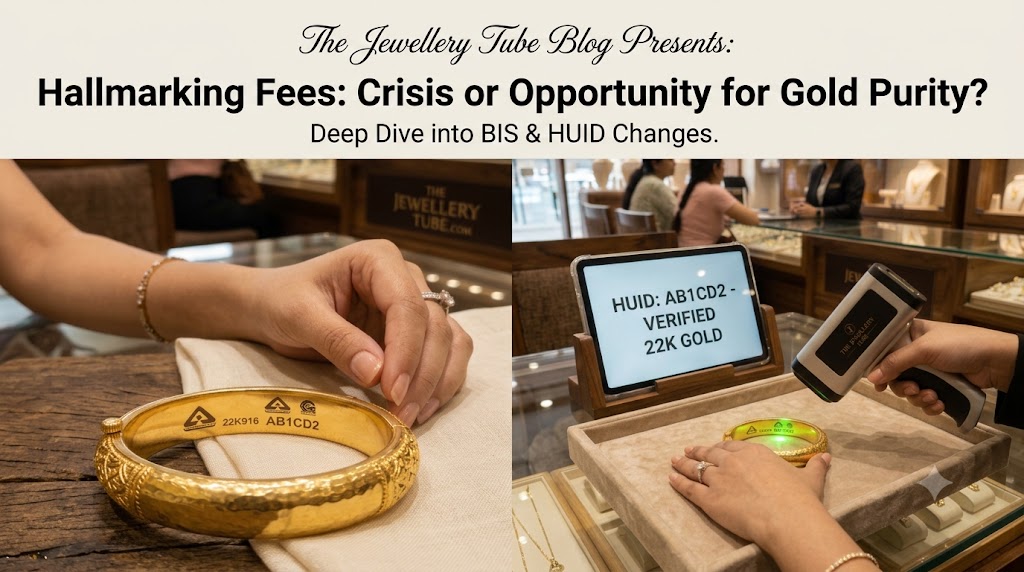

The Indian jewelry industry is navigating a significant shift just ahead of the festive and wedding-buying seasons. The Bureau of Indian Standards has raised the per-article hallmarking fee for gold items from forty-five rupees to seventy-five rupees. While the fee for silver remains unchanged at thirty-five rupees, this sixty-seven percent increase for gold has sparked widespread discussion across the market.
At first glance, this adjustment presents an immediate compliance challenge for jewelers. The new pricing structure means higher operational costs for every piece of gold jewelry submitted to recognized Assaying and Hallmarking Centres. Industry bodies have expressed concern that this flat fee increase could disproportionately impact lightweight and lower-value ornaments, potentially squeezing margins or requiring brands to rethink their pricing strategies for upcoming collections.
However, viewing this hike purely as a crisis overlooks the broader opportunity. The mandated hallmarking system was established to provide consumers with independent assurance of precious metal purity. By increasing the fees, the revenue supports the scaling and modernization of Assaying and Hallmarking Centres nationwide. A more robust infrastructure allows for faster testing cycles and more rigorous certification processes.
Ultimately, this change reinforces consumer trust in the long run. When buyers see the BIS standard mark, the purity indication, and the unique HUID number, they are investing in verified quality. As the industry adapts, the focus remains clear: upholding rigorous purity standards ensures the sustainable growth of the luxury jewelry market.
(Reference Images for WordPress Media Library: 1. A detailed close-up of a BIS hallmark engraving on a gold necklace. 2. A technician using a magnifying glass to verify a Hallmark Unique Identification number. 3. A festive gold jewelry display in a bustling Indian showroom.)
Would you like help drafting a social media teaser to go along with this launch?
BIS HALLMARK
The Indian gems and jewellery sector stands at a decisive crossroads. The Bureau of Indian Standards (BIS) revised the per-article hallmarking fee for gold jewellery from ₹45 to ₹75, leaving the silver rate steady at ₹35. Coming right in the middle of festive and bridal planning cycles, this roughly 67% increase has sparked heated debates across manufacturing hubs, retail chains, and consumer forums.
Is this steep revision an unnecessary compliance burden, or does it mark an essential upgrade toward a transparent, global-grade gold ecosystem?
1. The Disruption: Why Manufacturers and Retailers Are Concerned
For an industry built on thin operating margins and high inventory turnover, any cost hike at the testing phase directly influences bottom-line calculations.
- Impact on Lightweight Jewellery: Everyday-wear collections, lightweight rings, nose pins, and delicate chains (often weighing under 2 grams) feel the brunt of a flat ₹75 charge per piece. In low-ticket items, fixed hallmarking expenses represent a noticeable percentage of the overall making cost.
- Working Capital Squeeze for MSME Artisans: Small-scale karigars and regional goldsmiths operate with tight cash reserves. A sudden cost increment across bulk batches forces them to adjust processing budgets immediately.
- Volume Bottlenecks: Anticipation of fee increases often leads to pre-deadline rushes, creating temporary testing backlogs at local Assaying and Hallmarking Centres (AHCs).
2. The Counter-Perspective: Building Unshakable Consumer Trust
While initial operational friction is real, the long-term rationale points toward consumer protection and global market integration.
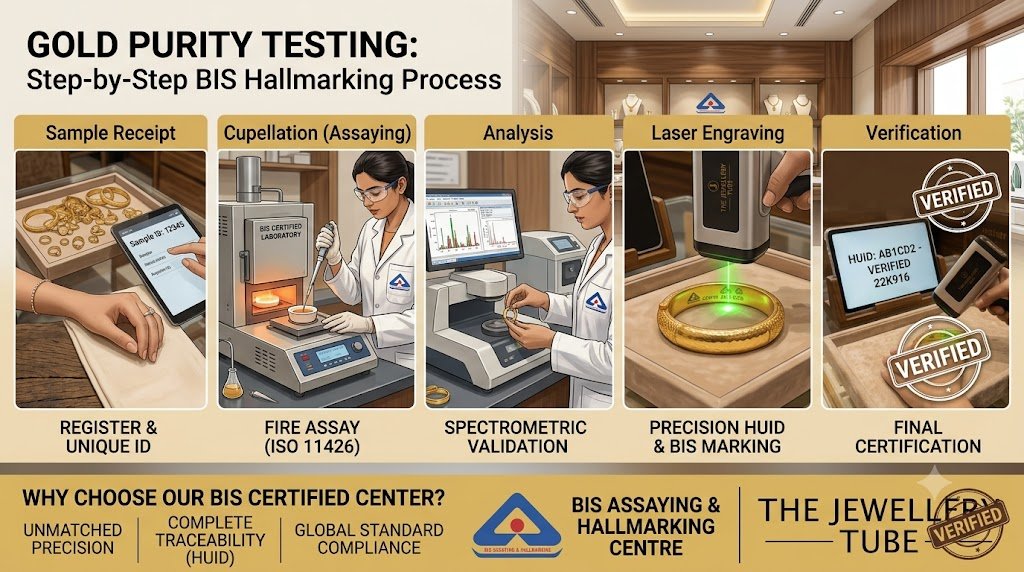
- World-Class Infrastructure: Upgrading an assaying centre requires precision XRF spectrometers, laser marking equipment, and certified chemical testing labs. Higher revenue per piece enables AHCs to invest in cutting-edge machinery and expand into semi-urban districts.
- Zero Tolerance for Adulteration: Hallmarking with a 6-digit alphanumeric Hallmark Unique Identification (HUID) leaves zero room for compromised carats. The consumer knows that 22K (916) or 18K (750) stamped on their purchase is independently guaranteed by national standards.
- Enhanced Resale and Liquidity: Hallmarked gold ensures clear, transparent exchange and buyback values across any jeweller in India, eliminating arbitrary deductions during resale.

3. Comparative Overview: What Has Changed?
| Parameter | Previous Structure | Revised Structure | Strategic Industry Impact |
|---|---|---|---|
| Gold Fee (per item) | ₹45 + applicable taxes | ₹75 + applicable taxes | Promotes better testing infrastructure and audit rigor |
| Silver Fee (per item) | ₹35 + applicable taxes | ₹35 + applicable taxes | Retains affordability for entry-level silverware & silver gifts |
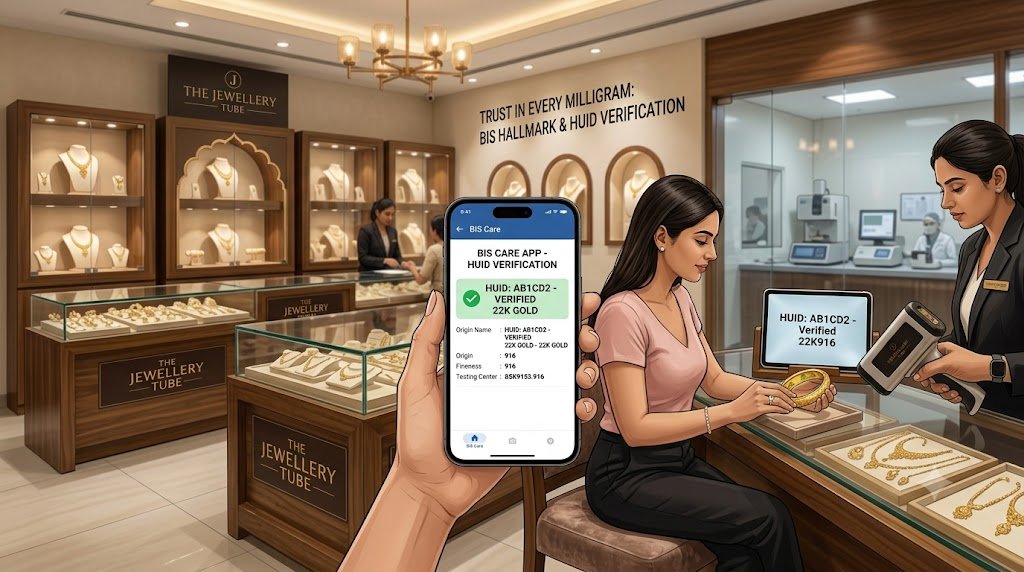
| Purity Mechanism | BIS logo + Purity mark + HUID | BIS logo + Purity mark + HUID | Complete traceability via the ‘BIS Care’ mobile app |
| Target Audience | B2B & Retail Customers | B2B & Retail Customers | Shifts purchase habits toward certified purity over unorganized trade |
4. How Smart Jewellers Can Turn This into an Advantage
Leading brands are not treating this revision as an extra cost; they are leveraging it as a marketing asset:
- Educate the Buyer at Counter: Explain to walk-in customers that the nominal testing fee guarantees every milligram of precious metal they pay for.
- Promote the ‘BIS Care’ App: Train floor staff to show customers how to verify their HUID code live on their smartphones before billing.
- Absorb or Bundle Intelligently: For high-value wedding sets, an extra ₹30 per article is negligible against the total ticket size. Transparent communication builds brand loyalty that far outweighs minor price adjustments.



 English (UK)
  English (United States)