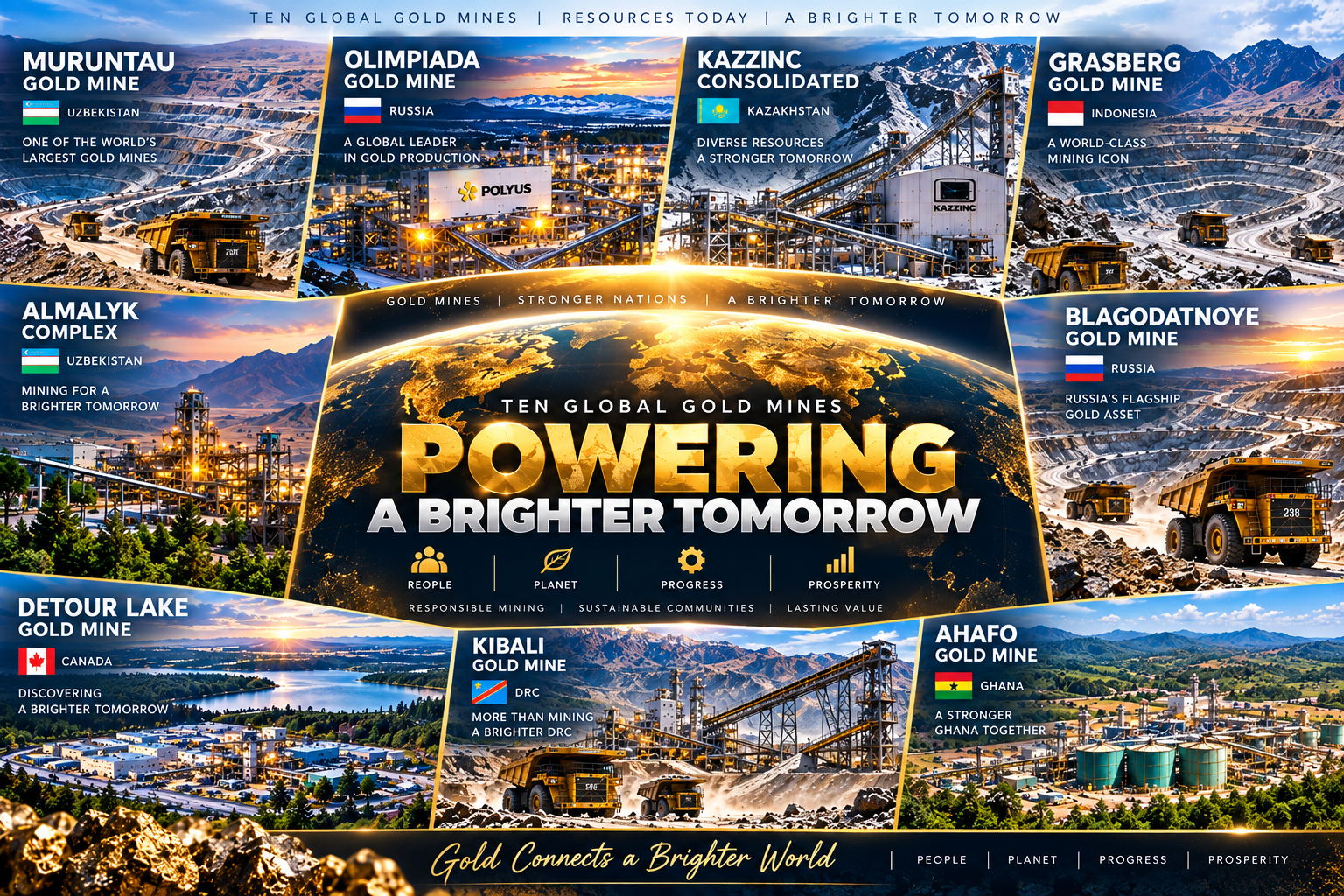

Gold grabbed the spotlight in 2025 as rising global trade tensions and accelerated central bank buying propelled the metal by more than 60%. Its rise continued into 2026, with prices reaching an all-time peak of nearly $5,600 an ounce in January.
Since then, bullion has fallen hard amid a market-wide liquidity stress and rising expectations of high interest rates, which were exacerbated by the war in the Middle East. Since the start of March, gold fell as much as 15%, nearly erasing all of its gains on the year. Gold mining equities, too, fell victim to the rout, with many of the market leaders suffering losses of 20% to 40%.
Nevertheless, long run view on the metal remains intact, given that central banks have been building up their gold holdings.
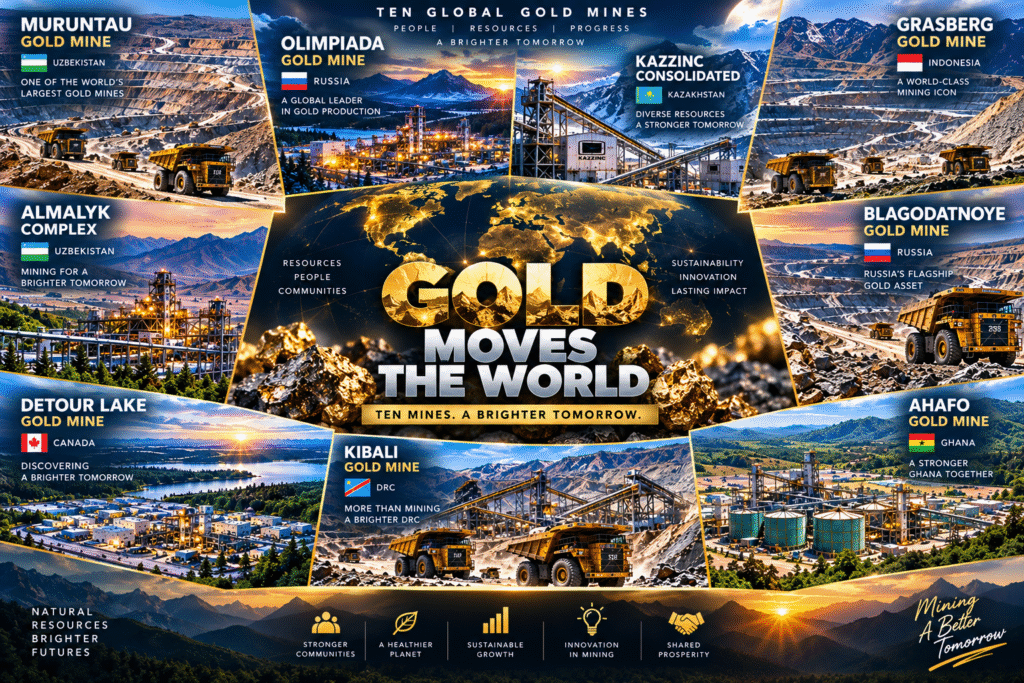
Gold’s bullish outlook is also attributed to the rise in private sector demand. According to the World Gold Council, the sector has seen heightened investment activity, resulting in annual gold demand exceeding 5,000 tonnes (approximately 146 million oz.) for the first time.
Also peaking last year was gold supply, which grew 1% to reach the 5,000-tonne mark as well, WGC’s data shows. Mine production — the major component of the supply — saw a modest rise to 3,672 tonnes (107 million oz.), breaking the record last seen in 2018.
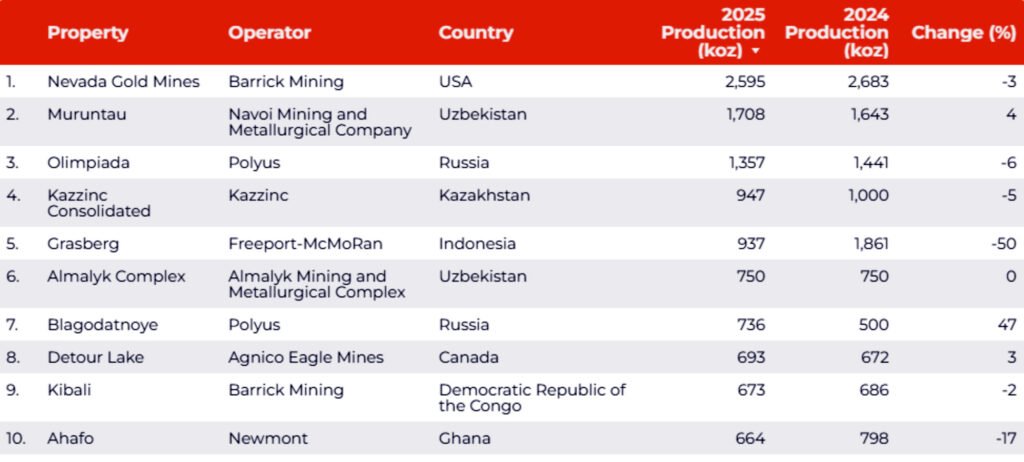
Below, we detail how each of the world’s biggest gold mining operations fared during this record year of production, measured in kilo ounces (koz):
#1 Nevada Gold Mines

1. Nevada Gold Mines – United States
At the top of the global ranking is Nevada Gold Mines (NGM), one of the largest and most important gold-producing complexes in the world.
Located across northern Nevada, the operation combines a vast network of open-pit and underground mines, processing facilities and supporting infrastructure. The complex includes major districts such as Carlin, Cortez, Turquoise Ridge and Phoenix.
Nevada Gold Mines is a joint venture between Barrick Mining and Newmont, with Barrick holding the majority interest. Rather than being a single traditional mine, NGM functions as an integrated mining system incorporating numerous deposits and processing operations.
The complex produced approximately 2.595 million ounces of gold in 2025, keeping it comfortably ahead of every other individual gold-producing operation in the world.
Its enormous production capacity illustrates the importance of Nevada to the global gold industry. The region has been mined for decades, but continued exploration, technological improvements and underground development have helped maintain its position as a world-class gold district.
Nevada Gold Mines demonstrates how modern mining increasingly relies on the integration of multiple deposits rather than dependence on a single open pit.
#2 Muruntau
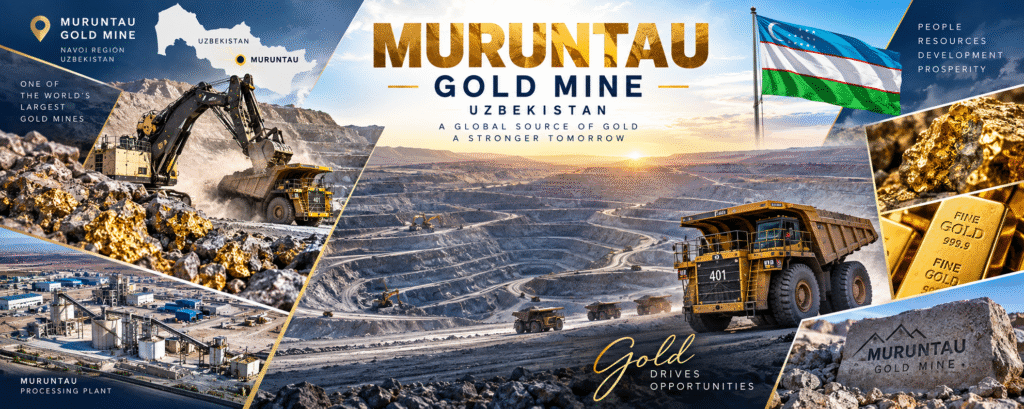
Located in Uzbekistan’s Kyzylkum Desert, Muruntau is one of the world’s most famous gold mines and is widely recognized as the world’s largest open-pit gold mine by physical scale.
The operation is owned and operated by Navoi Mining and Metallurgical Company (NMMC).
Muruntau produced approximately 1.708 million ounces of gold in 2025, placing it second globally.
The mine is enormous, stretching several kilometres across the desert landscape. Its geological endowment is equally impressive, with estimates of approximately 101 million ounces of gold resources reported for the broader operation.
Muruntau is particularly significant to Uzbekistan because the mine contributes a substantial share of the country’s gold production.
The mine’s enormous dimensions, high-grade ore zones and long operating history make it one of the most strategically important gold deposits on Earth.
Its location in a remote desert environment also presents major logistical and engineering challenges. Maintaining large-scale excavation, hauling, processing and water-management systems in such an environment requires sophisticated infrastructure and long-term planning.
#3: Olimpiada
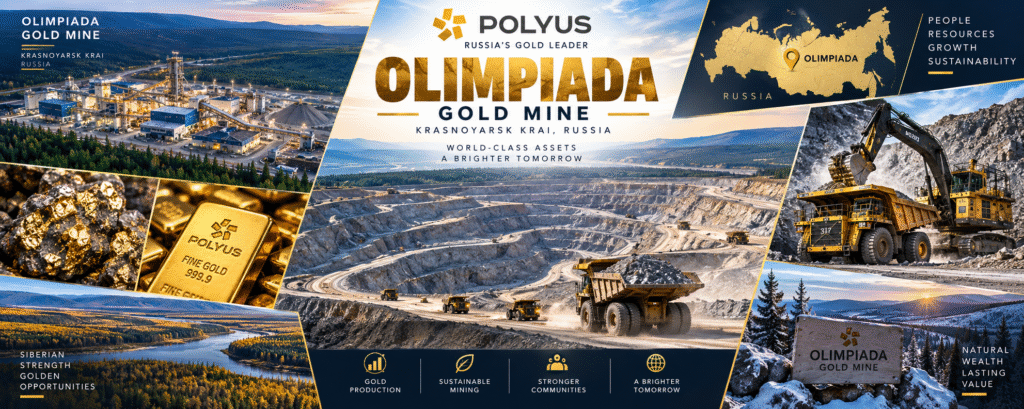
Russia’s Olimpiada mine, operated by Polyus, ranks among the world’s largest gold-producing operations.
Located in Krasnoyarsk Krai, Siberia, Olimpiada is a massive operation with a long production history dating back to the 1990s.
The mine produced approximately 1.357 million ounces of gold in 2025, placing it third in the global ranking.
One of Olimpiada’s most interesting characteristics is the nature of its ore. Much of the gold is contained within refractory sulphide minerals, meaning conventional processing methods are insufficient for efficiently recovering the metal.
To address this challenge, the operation uses advanced processing technologies, including bio-oxidation. Specialized bacteria are used to break down sulphide minerals and expose the gold for subsequent recovery.
This makes Olimpiada an important example of how modern mining combines geology, metallurgy, chemistry and biotechnology.
The mine is also strategically important to Polyus and represents a major portion of the company’s gold production.
#4: Kazzinc Consolidated

Kazakhstan’s Kazzinc Consolidated moved into fourth position in the latest ranking, producing approximately 947,000 ounces of gold in 2025.
Kazzinc is a major polymetallic mining and metallurgical company, producing not only gold but also zinc, lead and other metals.
Its position in the global gold ranking highlights an important characteristic of the mining industry: some of the world’s largest gold producers are not exclusively gold mines.
Gold can occur alongside other economically valuable metals, and large polymetallic operations can recover several commodities from the same ore systems.
Kazakhstan has become an increasingly important player in the global mining industry because of its substantial mineral resources and large-scale mining infrastructure.
Kazzinc’s performance also demonstrates the importance of diversified mining operations in maintaining stable production across changing commodity markets.
# 5: Grasberg

Indonesia’s Grasberg mining complex is one of the world’s most famous mining operations.
Located in Papua, Grasberg is particularly notable because it is a major producer of both copper and gold. The operation is associated with Freeport-McMoRan and Indonesia’s state-linked mining interests.
Grasberg produced approximately 937,000 ounces of gold in 2025, placing it fifth in the latest ranking.
However, its 2025 performance was dramatically affected by operational disruption. Gold production fell approximately 50% year over year, causing Grasberg to fall from third position to fifth.
The disruption demonstrates how vulnerable even the world’s largest mining operations can be to geological and operational events.
Despite the decline, Grasberg remains a globally significant mining complex. Production is expected to recover progressively as the operation advances through its restart and ramp-up plans.
The mine’s long-term importance comes from its enormous copper and gold resources, sophisticated underground mining systems and strategic position in Indonesia’s mineral economy.
#6: Almalyk Complex
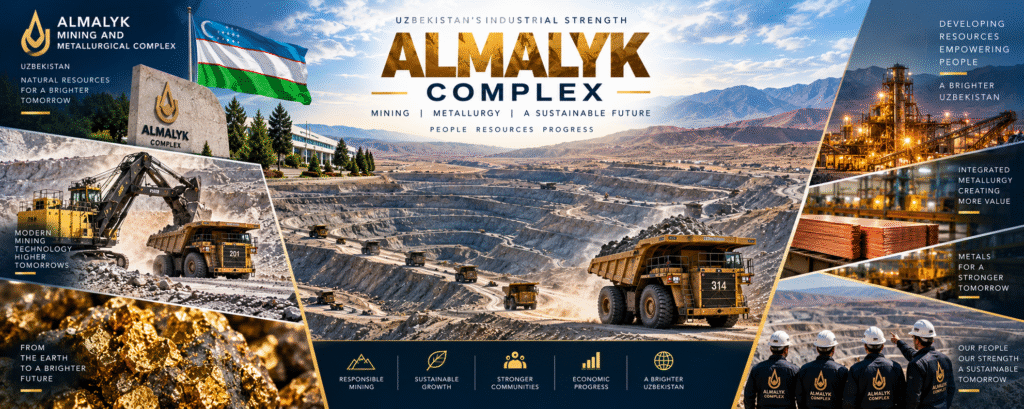
The Almalyk Mining and Metallurgical Complex (AMMC) is another major Central Asian mining operation.
Located in Uzbekistan, the complex produced approximately 750,000 ounces of gold in 2025, placing it sixth in the global ranking.
Almalyk is a diversified mining and metallurgical operation rather than a conventional single-commodity gold mine.
The complex is particularly important for Uzbekistan’s broader metals industry and benefits from the country’s extensive mineral resources.
Uzbekistan’s presence at both second and sixth positions demonstrates the extraordinary scale of the country’s mining sector. Together, Muruntau and Almalyk show how Central Asia has become one of the most important regions for large-scale gold production.
#7 Blagodatnoye

Russia’s Blagodatnoye mine, operated by Polyus, ranks seventh among the world’s largest gold-producing operations.
The mine produced approximately 736,000 ounces of gold in 2025.
Blagodatnoye is located in the Krasnoyarsk region and forms part of Polyus’s extensive portfolio of large-scale Russian gold assets.
The operation recorded strong growth in 2025, with production increasing substantially compared with the previous year. Industry data attributes part of this improvement to the ramp-up of additional processing capacity.
Blagodatnoye’s appearance in the global top 10 reinforces Russia’s position as one of the world’s most important gold-producing countries.
The country possesses extensive gold resources across Siberia and the Russian Far East, supported by a large domestic mining industry.
#8: Detour Lake
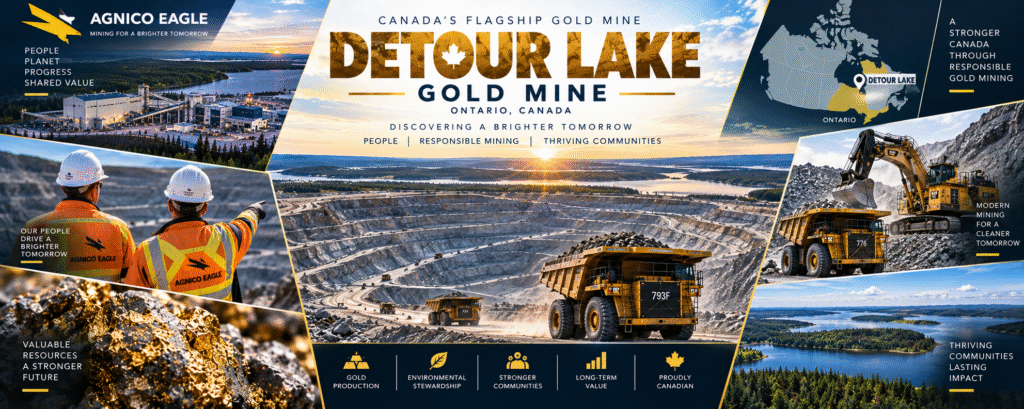
Canada’s Detour Lake mine ranks eighth globally and is one of the country’s most important gold operations.
Located in northern Ontario, Detour Lake is operated by Agnico Eagle Mines.
The mine produced approximately 693,000 ounces of gold in 2025, according to the latest global ranking.
Detour Lake is one of Canada’s largest open-pit gold operations and has benefited from continued investment in mine development, processing efficiency and operational improvements.
Canada is one of the world’s major gold-producing countries, and operations such as Detour Lake are central to maintaining the country’s position in the global market.
The mine is also notable because Canadian production experienced strong growth during 2026. The World Gold Council reported that Canada’s Q2 2026 mine production increased significantly year over year, with the ramp-up and expansion of operations including Detour Lake contributing to the increase.
#9: Kibali
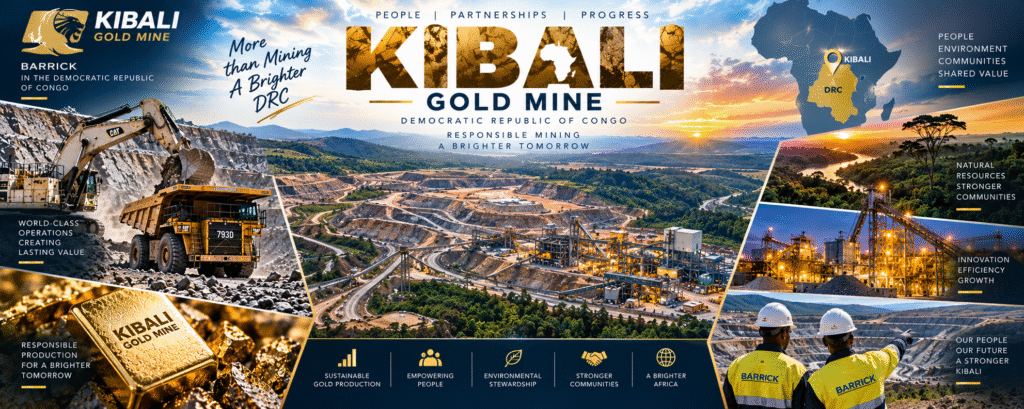
The Kibali Gold Mine in the Democratic Republic of Congo is one of Africa’s largest and most technologically advanced gold operations.
Kibali produced approximately 673,000 ounces of gold in 2025, placing it ninth globally.
The operation is a joint venture involving Barrick, AngloGold Ashanti and the Democratic Republic of Congo’s state mining interests.
Kibali is particularly notable for its combination of open-pit and underground mining and its extensive use of automation and modern infrastructure.
One of its most distinctive features is its renewable-energy infrastructure. The operation uses a combination of hydroelectric power and solar generation, allowing a substantial share of its electricity requirements to come from renewable sources.
This makes Kibali an important case study in the changing environmental expectations facing the global mining industry.
Large mines increasingly need to consider not only production volumes but also energy efficiency, carbon emissions, water management and relationships with surrounding communities.
#10: Ahafo
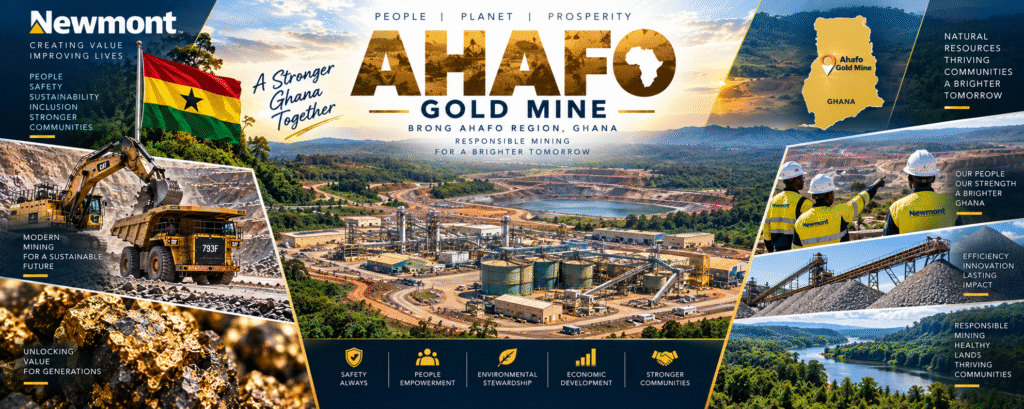
Completing the top 10 is Ahafo, one of Ghana’s most important gold-mining operations.
Operated by Newmont, Ahafo produced approximately 664,000 ounces of gold in 2025.
Ghana is one of Africa’s most important gold-producing countries, and the country experienced particularly strong gold production growth in 2025.
The Ahafo operation benefits from Ghana’s rich geological environment and extensive mining infrastructure.
Ghana’s position in the global gold market is becoming increasingly significant. According to industry data, Ghana’s national gold production reached a record level in 2025, reinforcing its position as Africa’s largest gold producer.
Ahafo therefore represents not only a major mine but also part of a broader resurgence in West African gold production.
Gold Production Outlook for 2026
The global gold industry entered 2026 following a record year.
The World Gold Council reported that global mined gold production reached approximately 3,672 tonnes in 2025, the highest level in its historical data series.
The first quarter of 2026 continued this positive trend. Global mine production reached approximately 884.7 tonnes in Q1 2026, about 2% higher than Q1 2025 and a record first-quarter level.
Production remained strong during the second quarter as well, with Q2 2026 mine production almost 2% above the previous second-quarter record. Canada was among the countries reporting particularly strong growth, helped by expanding operations including Detour Lake.
The World Gold Council expects mined production to increase further during 2026, although the growth rate is expected to remain relatively modest.
Several factors will influence the ranking of the world’s largest mines during the year:
- Expansion projects
- New underground production
- Processing-plant upgrades
- Ore grades
- Geological conditions
- Operational disruptions
- Labour availability
- Energy costs
- Gold prices
- Environmental regulations
- Government policies
- New mine development
As a result, the 2025 production ranking provides the best current benchmark for a 2026 article, while individual mine performance during the remainder of 2026 could change the final annual ranking.
Conclusion
The world’s largest gold mines in 2026 represent the extraordinary scale, technology and complexity of modern mining.
From the vast multi-mine system of Nevada Gold Mines in the United States to the enormous open pit of Muruntauin Uzbekistan, the bio-oxidation technology used at Olimpiada, the polymetallic operations of Kazzinc, the copper-gold powerhouse of Grasberg, and the renewable-energy systems at Kibali, each operation demonstrates a different approach to producing gold on a massive scale.
The latest data also shows that the global gold industry is geographically diverse. North America, Central Asia, Russia, Southeast Asia, Africa and Australia all play important roles in global supply.
At the same time, the industry is facing a changing environment. Mature mines must replace declining ore reserves, mining companies are investing in automation and artificial intelligence, governments are demanding greater environmental responsibility, and operators are looking for ways to reduce energy consumption and emissions.
For 2026, Nevada Gold Mines remains the world’s leading gold-producing operation based on the latest complete annual production data, while Muruntau and Olimpiada continue to demonstrate the enormous potential of Central Asian and Russian gold districts.
As gold remains one of the world’s most valuable precious metals, these giant mining operations will continue to play a crucial role in determining the supply of newly mined gold and shaping the future of the global mining industry.
Important note: The ranking above uses the latest complete annual production data available for comparison — primarily 2025 production — rather than presenting incomplete 2026 full-year figures. This distinction is important because 2026 is still underway.
Source: https://www.mining.com/
Keywords
world’s top 10 largest gold mines 2026, largest gold mines 2026, biggest gold mines in the world, top gold producing mines, largest gold producing mines, world’s largest gold mine, gold mine production 2025, gold mining production 2026, global gold mining, gold mine ranking, top 10 gold mines, gold mining companies, major gold mines, gold production by mine, gold mining industry



 English (UK)
  English (United States)